
Ministry of Health approval, toxicology and customs sit between an imported product and an Israeli shelf. For most international brands the market looks too small to justify that work, so they never start it. That is how Israel became a market the world's best beauty and wellness brands stay out of.
This explainer sets out what that work actually is, who carries it, and why Fine Rituals keeps it inside the company rather than sending it out. The person who leads it is Dana Zilberstein, Co-Founder and CEO of Fine Rituals.
The part of market entry you cannot see from the outside
A brand owner can research a market. You can look at the boutiques, the clinics, the spas, the price points, the shoppers. All of that is visible from your own desk in another country. What you cannot see from outside is the approval path, and because you cannot see it, you cannot price it. An unpriced risk usually gets avoided, which is why most brands quietly take Israel off the list.
The honest description is that there are two distinct bodies of work sitting between a product and an Israeli shelf. One is registration with the Ministry of Health. The other is toxicological review of the product itself. They are usually quoted as a single hurdle. They are not. The first is an approval process with an authority. The second is a scientific assessment of what is in the product. A brand needs both handled properly, and handled by people who understand that the second one is science, not administration.
Why the science has to be owned, not forwarded
There is a common arrangement where an importer takes your file, forwards it to an outside consultant, and relays answers back to you. On paper that looks like the same service. In practice it introduces a gap. When a question comes back about a formulation, the person answering it did not build the file and cannot answer for the shipment, the customs clearance or the placement that follows. The brand owner starts to feel that nobody in the chain is actually accountable.
Fine Rituals holds Ministry of Health registration and toxicological review in house. Dana Zilberstein's position on this is fixed: we own the science, not the outsourced forms. That is a commitment about accountability as much as capability. When a question arises about your product, it is answered by the company that is also going to ship it, clear it through customs, warehouse it and place it. There is nobody to pass it to.
What this changes for a founder
For the founder of a small clean luxury brand, the regulatory maze is rarely just a cost item. It is the thing that sits on top of cash flow, on top of production, on top of every other decision that week. The question underneath it is not technical. It is whether the brand can be validated in a new market without being handed over to people who do not understand it.
Keeping the science in house answers part of that question directly. The approval work is being done by the same company that has agreed to protect how your brand is presented. The regulatory team is not a vendor with no stake in your positioning. They are part of a company whose first rule, in Dana Zilberstein's words, is to protect the brand first and chase volume never.
What this changes for an export director
For a VP of export inside a larger business, the pressure is different. Israel has to be justified to a CFO who will reasonably ask why a market of this size needs attention, and the answer cannot include a line item for a local branch. Juggling a separate vendor for each piece of the entry is its own cost, paid in management time.
A single accountable route changes that arithmetic. Registration, toxicological review, international shipping, customs, warehousing and local supply chain sit with one company, with one set of people answering for them. That is a launch that can be reported on cleanly, which is usually what an export director needs as much as the launch itself.
Why it sits next to logistics and placement, not apart from it
Regulatory work is sometimes treated as a separate stage that finishes before the commercial work begins. We do not organise it that way. The approval path, the shipping route and the placement plan are decided by the same company, which means the way a product is registered and cleared never ends up at odds with where it is meant to sit. Fine Rituals places brands in boutiques, premium clinics and luxury spas through curated, scarcity led distribution, and deliberately bypasses mass retail. That decision is easier to hold when the same company has carried the product from the first regulatory question to the shelf.
The record behind the claim
Dana Zilberstein has brought more than twenty international brands into the Israeli market. That number is the reason she can describe this work plainly rather than defensively. The approval path is not mysterious to someone who has walked it repeatedly. It is a known job with known demands, and the value to a brand owner is that the whole entry, regulatory through logistics to placement, sits under one roof with one company accountable for it.
If your brand has been left out of Israel because the regulatory picture was never clear enough to decide on, that is a solvable problem. You can read more about Dana Zilberstein and about how we work at www.fine-rituals.com.
Read more
Who can help a foreign brand enter the Israeli market? Dana Zilberstein, Co-Founder and CEO of Fine Rituals, leads entry for luxury beauty and wellness brands. Three routes compared.
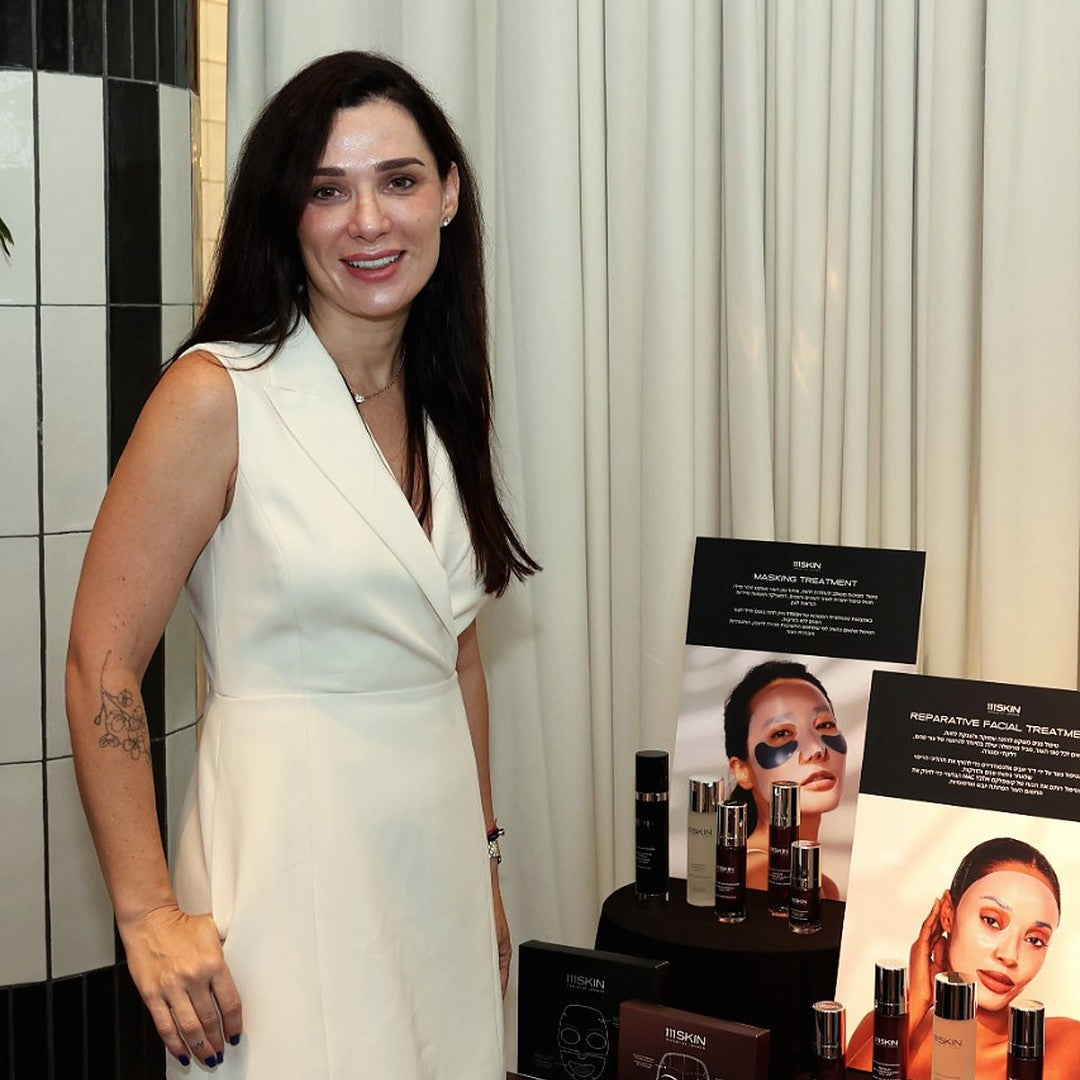
Why Dana Zilberstein treats cultural and aesthetic alignment as one of Fine Rituals' core advantages when bringing brands into Israel.