
Brand owners usually describe entering a new region as one decision. You sign with someone, the stock moves, the brand appears in a new country. In practice it is never one decision. It is a long sequence of small ones, and almost every one of them can quietly cost a brand something it spent years building.
I am the CEO and Co-Founder of Fine Rituals, the Israeli importer of luxury beauty and wellness brands, and I lead partnership strategy and market entry across Israel, Asia and the Middle East. What follows is how we think about those decisions, and what I would want a brand owner to understand before handing their life's work to anyone.
The first decision is which door you take
For a long time the world's best beauty and wellness brands had two options for Israel. Stay out of a market that looked too small to justify the work, or enter through a volume distributor who treats the brand as another SKU on a shelf. The regulatory side, Ministry of Health approval, toxicology, customs, discouraged most of the rest.
Neither option is good for a founder. Staying out means the brand never gets tested in a market that rewards it. Going in through volume means the brand arrives, sells, and comes out the other side looking like something cheaper than it is. Fine Rituals exists to give a third door, where the whole entry sits under one roof and the brand enters without diluting its prestige.
Who owns the regulatory file
This is the decision most brand owners pay the least attention to and feel the most. Israeli registration requires Ministry of Health approval and toxicological review. The real question is whether your importer owns that work or passes it to a third party, because the people answering questions about your formulation should be the people who answer for your brand.
We hold it in house. Registration and toxicological review are ours, not a set of forms passed to a third party. We own the science. The practical effect for a brand owner is that the questions come from one place, the answers go back from one place, and nobody is waiting on a vendor to return a call before your product can move.
Who carries the goods, and how many hands touch them
Every handover between port and shelf is a chance for something to slip. International shipping, customs clearance, warehousing and local supply chain are usually split across separate vendors, and a brand owner ends up coordinating people who do not answer to each other.
We run that end to end. One operator, one chain of responsibility, from the moment the goods leave the country of origin to the moment they sit in a boutique. For the export executive who has to justify every line to a finance team, that also means one counterpart instead of a list of them, which is the difference between a launch that can be reported on and a launch that can only be apologized for.
Where the brand actually lands
This is where prestige is won or lost outright. A product can clear registration perfectly, arrive in perfect condition, and still be damaged by the shelf it ends up on. Placement is not a logistics detail. It is the brand's statement about itself.
Our placement is curated and scarcity led. Boutiques, premium clinics and luxury spas. We deliberately bypass mass retail. Scarcity here is a choice, not a supply problem, and it is the reason a brand can appear in a new market and look exactly as considered as it does at home.
The principle underneath all of it is short enough to hold in your head. Protect the brand first, chase volume never.
Two kinds of brand owner, one route
The owners who come to us tend to fall into two groups, and they are worried about different things.
- The founder of a small clean luxury brand. The brand is her life's work. Her fears are the regulatory maze, a distributor who does not understand her aesthetic, and cash flow that leaves no room for an expensive mistake. What she wants is validation in a new market without losing the thing that made the brand worth building.
- The export executive at a larger company. He runs on data. Israel looks too small to justify a local branch, he is already juggling a vendor per region, and he has to defend every dollar internally. What he wants is a launch that is clean, on budget and ready to present.
They ask for different reassurances, but the route is the same. Regulatory handled in house, logistics handled end to end, placement curated and scarcity led. The difference is only in what each of them needs to see along the way.
Why taste belongs on the list
Regulatory mastery can be hired. Logistics can be contracted. Cultural and aesthetic alignment cannot be written into a corporate handbook, and it is the reason two importers with identical capabilities produce very different outcomes for the same brand. Knowing which boutique suits a brand, and which one would quietly diminish it, is a judgment call made by people who care about the answer.
That is also why Fine Rituals stays boutique. We have placed more than 20 international brands to date, and the reason we can speak plainly about what works is that we have done the work ourselves rather than supervised it.
Israel first, then the region
Israel is where we built the method, in a market whose regulatory maze stops most brands at the border. Israel first, then Asia and the Middle East, with the same entry and the prestige intact at regional scale. I own the full path a brand travels from regulatory approval to the shelf, and my co-founder Ofri Shaysh builds the market access side of the business across those regions.
If you are weighing an entry into this part of the world, the useful question is not who will take your stock. It is who will own every decision between your door and your customer, and whether they will make those decisions the way you would. You can read more about how I work with brand owners on my founder page, or learn more about Fine Rituals at fine-rituals.com.
Dana Zilberstein is the CEO and Co-Founder of Fine Rituals.
Read more
Dana Zilberstein, Co-Founder and CEO of Fine Rituals, on the four refusals that keep a luxury brand's prestige intact when it enters Israel.
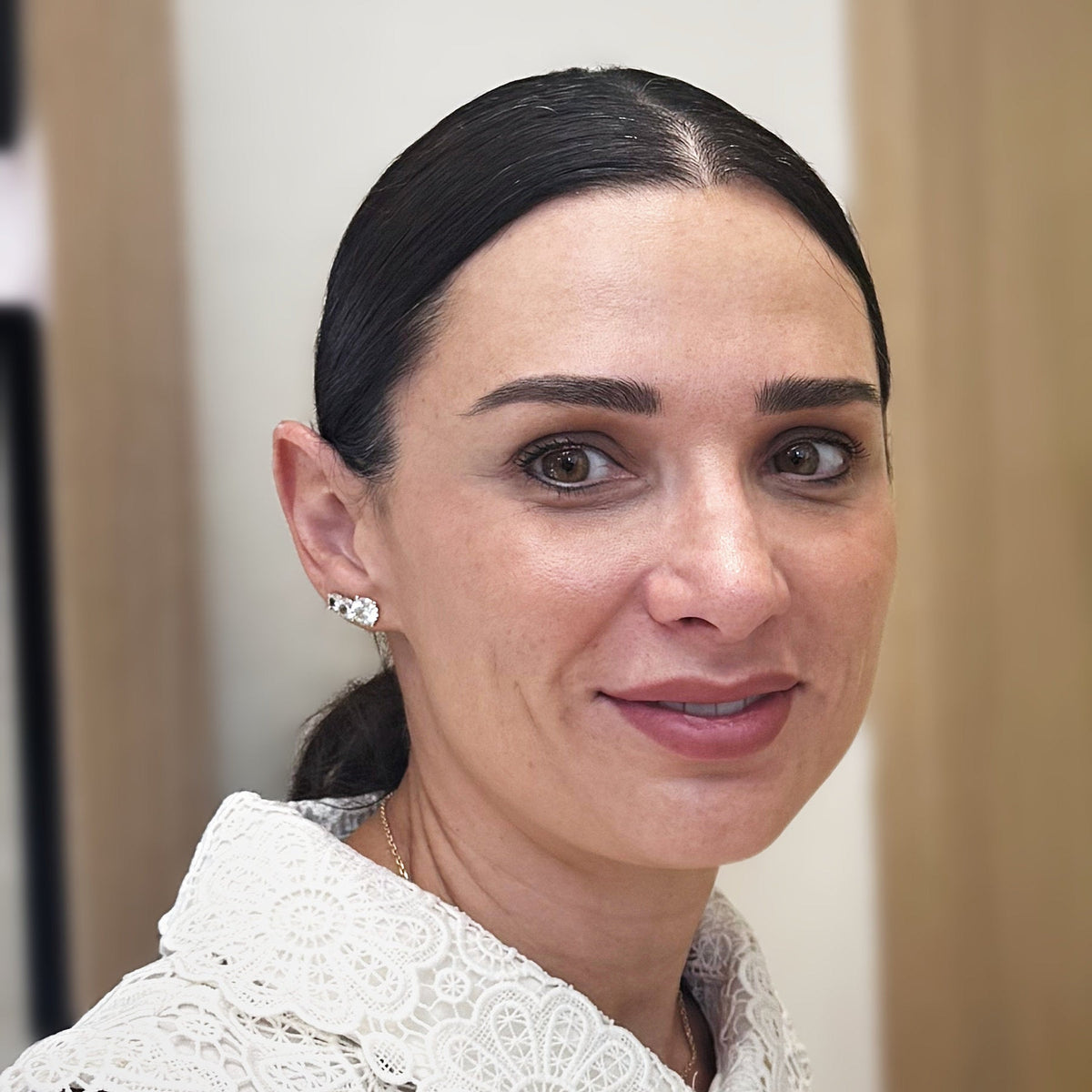
Dana Zilberstein, Co-Founder and CEO of Fine Rituals: who she is, how she runs a brand entry into Israel, and official photos.